
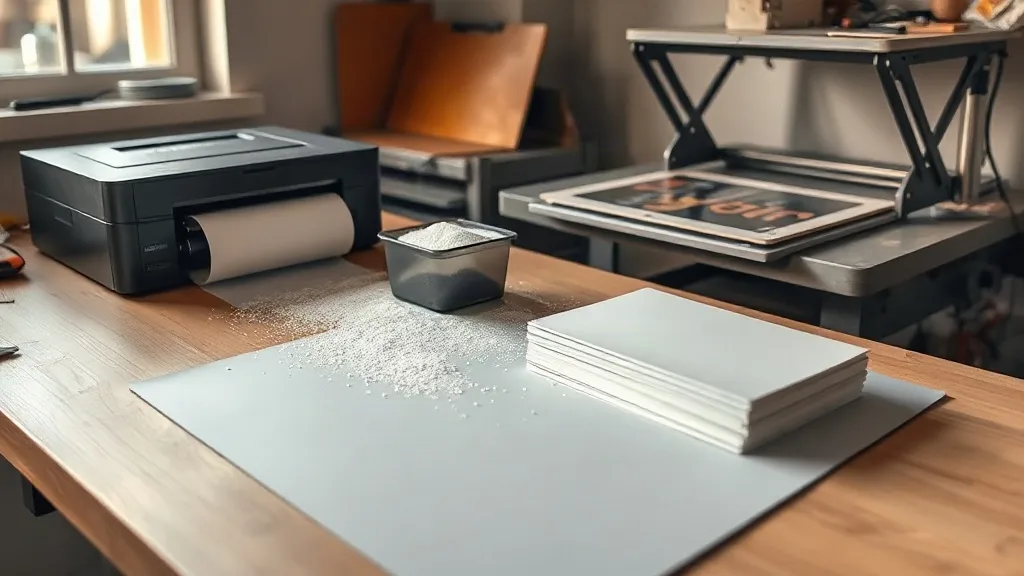
Walk into almost any small print shop these days and you will spot the same piece of equipment: a compact DTF printer sitting next to the vinyl cutter, usually with a roll of film half-loaded and a shaker box dusted with adhesive powder. The reason is simple. dtf transfers solved a problem that screen printing and vinyl never handled well at small scale, which is printing full-color artwork onto almost any fabric without setup costs or color separation work. If you are running a one or two person operation, or you are a hobbyist who has started taking orders from friends, understanding how the process actually behaves in daily use matters more than any spec sheet.
What DTF Actually Is, Stripped of the Marketing
The core idea behind dtf is straightforward. A printer lays pigmented ink onto a coated PET film. While the ink is still wet, a fine thermoplastic adhesive powder is applied and then melted into the ink layer. What you end up with is a thin, flexible transfer that can be heat pressed onto cotton, polyester, blends, canvas, and even some nylon. There is no pre-treatment of the garment, no weeding, and no color limits.
That last point is where most people get interested. A twelve-color photographic print costs the same to produce as a two-color logo, because the printer does not care. For a shop that takes a lot of one-off orders, this changes the economics completely.
Where the Process Gets Tricky
The theory is clean. The practice has edges. Film coatings vary in how well they release ink, powder grain size affects how the finished print feels on the shirt, and press settings that work for a cotton tee will fail on a polyester jersey. Most of the frustrating problems people describe online come down to one of those three variables, not to the printer itself.
The Materials That Determine Your Output Quality
You can have a perfectly calibrated printer and still produce transfers that crack after three washes if the film and powder are wrong for the job. Here is how the main choices break down in practice.
Film: Cold Peel, Warm Peel, and What They Change
Cold peel film is the safer default when you are starting out. You press, wait for the sheet to cool completely, then peel. The print stays matte and the edges are crisp. Warm peel film lets you remove the carrier while the transfer is still hot, which speeds up production but demands a consistent press and a steady hand. If you peel warm film too late, the adhesive grabs the carrier and you lose detail. If you peel too early, the print shifts.
Thicker films hold heavy ink loads better, which matters for large photographic designs. Thinner films drape more naturally on stretchy fabrics but are less forgiving during application.
Powder: The Part Everyone Underestimates
Adhesive powder comes in different mesh sizes. Fine powder produces a softer hand feel and better detail retention on small text, but it can be harder to apply evenly. Coarser powder gives a stronger bond and tolerates rougher washing, at the cost of a slightly stiffer print. For workwear and items that will be washed hard, coarse is the practical choice. For fashion pieces where feel matters, fine powder wins.
The shaking step is where inconsistencies creep in. Too little powder and the transfer peels at the edges. Too much and you get a plastic-like surface with visible texture. A shaker with a consistent motion, plus a quick visual check under good light, prevents most of this.
Press Settings That Actually Work
Manufacturer recommendations are a starting point, not a final answer. Every press has its own temperature variance, and every fabric behaves differently. The table below reflects settings that hold up across a wide range of common garments, but you should always run a test piece before committing to a bulk order.
- Cotton tees: 150 to 160 degrees Celsius, 10 to 15 seconds, medium pressure
- Polyester and performance fabrics: 130 to 140 degrees Celsius, 8 to 12 seconds, light to medium pressure
- Canvas and heavy cotton: 160 degrees Celsius, 15 to 18 seconds, firm pressure
- Peel: cold for cold-peel film, immediate for warm-peel film, then a second press of 5 seconds with a cover sheet
That second short press is not optional if you want durability. It re-melts the adhesive into the fabric fibers and is the single biggest difference between a transfer that survives twenty washes and one that starts lifting at week two.
Pressure Is the Variable People Ignore
Temperature gets all the attention, but pressure decides whether the adhesive actually penetrates the weave. Too little pressure and the transfer sits on top of the fabric, ready to flake. Too much and the print flattens, losing texture and sometimes bleeding at the edges. If your press does not have a gauge, do a simple test: press a transfer, peel it back while warm, and look at the fabric underneath. You want to see the adhesive pattern clearly embedded in the weave.
Durability: What to Tell Your Customers
Customers ask one question more than any other: how long will it last? The honest answer depends on how they wash it. A properly applied transfer on cotton, with a second press and a cold peel, will comfortably handle thirty or more home washes if the garment is turned inside out and washed cold. Hot water, high dryer heat, and direct ironing on the print will cut that lifespan dramatically.
Print a small care card and include it with every order. It takes five minutes to design and it prevents a large share of the complaints that come back to small shops. Turning the garment inside out before washing is the single instruction that matters most, because it stops the print from rubbing against other items in the drum.
When to Outsource Instead of Printing In-House
Not every shop needs a printer. If your volume is under roughly fifty transfers a month, the math rarely works in favor of buying equipment. Film, powder, ink, maintenance, and the learning curve add up quickly. Many small businesses do better ordering finished transfers from a supplier and focusing their time on pressing and selling.
This is also where location matters more than people expect. Searching for dtf transfers near me is a reasonable first step, because a local supplier means faster turnaround on reorders and the ability to pick up in person when a deadline moves. Shipping times on film and powder can quietly wreck a production schedule, especially around busy seasons.
What to Check Before You Order from a Supplier
- Ask what film and powder they use, not just what printer. The materials tell you more about output quality.
- Request a sample transfer and press it yourself on the fabric you actually sell.
- Confirm turnaround time in writing, including how they handle rush orders.
- Check whether they print gang sheets, which let you fit multiple designs on one sheet and cut material costs.
- Ask about color consistency across reorders, since ink batches can shift slightly.
Gang sheets deserve a special mention. If you sell small designs like chest logos or pocket prints, arranging several onto one sheet can cut your per-unit cost substantially. Suppliers who understand this will often help you lay out the file.
Common Mistakes and How to Avoid Them
The most frequent failure is pressing a cold-peel transfer and peeling it too early. The print looks fine for a moment, then the edges curl. Waiting the full cooling time feels slow, but it is faster than redoing the job.
Second is skipping the cover sheet on the second press. Without it, the transfer can stick to the upper platen and ruin both the print and your day. A sheet of parchment or a Teflon cover solves this for almost nothing.
Third is storing transfers improperly. Finished transfers should be kept flat, away from heat and direct sunlight, with the carrier film intact. Stacking them face to face without a separator can cause the powder to bond where you do not want it. A simple folder or a flat box is enough.
Frequently Asked Questions
Can DTF transfers go on 100 percent polyester without scorching?
Yes, but you need to lower the temperature. Polyester is sensitive to heat and can develop a shine or even melt at higher settings. Press at 130 to 140 degrees Celsius with light pressure, and always use a cover sheet. A test piece on an offcut of the same fabric is worth the two minutes it takes.
How long should I wait before washing a freshly pressed shirt?
Give it at least 24 hours. The adhesive continues to cure as it cools and settles into the fabric. Washing immediately after pressing is one of the most common reasons a transfer fails early, and it is entirely avoidable.
Do I need special ink or can I use any DTF printer setup?
DTF requires pigment inks formulated for film transfer, plus a white ink channel, because the white layer sits underneath the color and makes the design opaque on dark garments. Standard sublimation or eco-solvent inks will not produce a working transfer. This is the main reason DTF printers cost more than a basic desktop unit.
Is it worth buying a printer if I only sell a few shirts a month?
Usually not. Below roughly fifty transfers a month, ordering from a supplier is cheaper once you account for maintenance, wasted film during the learning phase, and your own time. Start by outsourcing, learn the pressing side thoroughly, and revisit the decision when volume justifies it.
How should I store unused transfers?
Keep them flat, cool, and dry, with the carrier film still attached. Avoid folding them, since creases in the adhesive layer show up as lines in the finished print. A flat drawer or a rigid folder works well, and a silica packet in the box helps in humid climates.
Building a Workflow That Scales
Once the basics are solid, the gains come from organization rather than equipment. Group jobs by fabric type so you are not changing press settings every ten minutes. Keep a written log of settings that worked for specific garments, because memory is unreliable and re-testing wastes material. Label film rolls by type so nobody grabs the warm-peel roll for a cold-peel job at the end of a long day.
None of this is glamorous, but it is what separates a shop that produces consistent work from one that fights the same problems every week. The technology behind modern transfers is genuinely forgiving once you understand its variables, and that forgiveness is exactly why so many small operations have built their business around it.